Recovery isn't the boring part between workouts — it's when the actual adaptation happens. This guide breaks down what's going on physiologically during recovery, where essential amino acids fit into that picture, and what a realistic, evidence-aware recovery routine looks like.
What Happens During Exercise
Resistance training and other physical activity place stress on muscle tissue. That stress is the stimulus; recovery is the window in which the body restores and adapts to it. Skip recovery, and you're mostly accumulating fatigue rather than progress.
Protein Turnover and Amino Acids
Muscle tissue is in a constant state of breakdown and rebuilding — a process called protein turnover. To rebuild, the body needs a supply of amino acids, including the essential ones that can't be manufactured internally. This is the core nutritional argument behind essential amino acid supplementation: give the body raw material for a process it's already running.
Leucine and Muscle Protein Synthesis
Leucine, one of the three BCAAs, has drawn particular research interest for its role in cell-signaling pathways tied to muscle protein synthesis. It's often the headline amino acid in marketing copy for exactly this reason — but signaling is only the trigger, not the whole build process.
Why a Complete Amino Acid Profile Matters
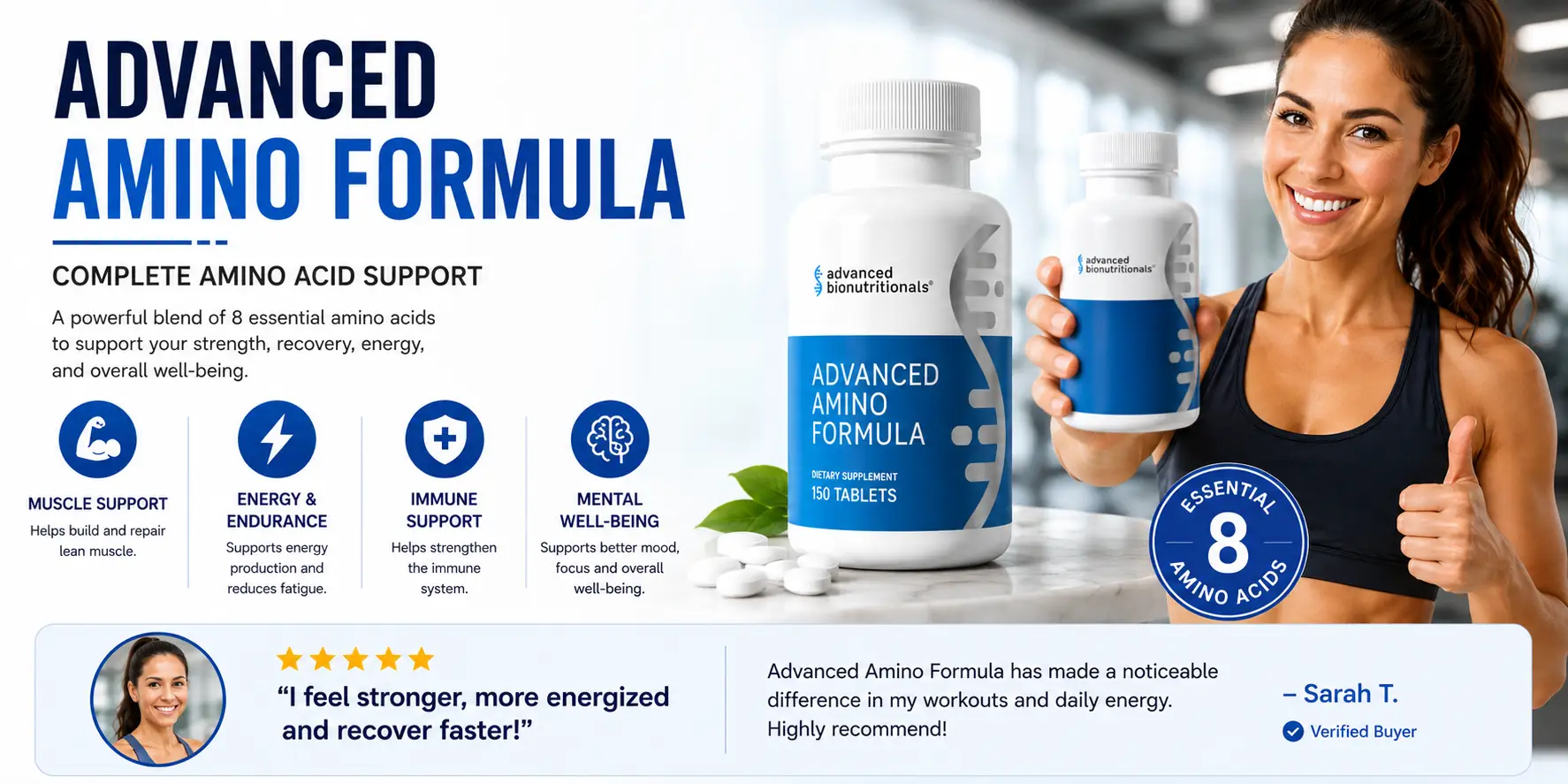
Building an actual protein molecule takes more than a signal — it takes the full set of amino acids as construction material. That's the reasoning behind formulas like Advanced Amino Formula that go beyond the three BCAAs to include lysine, phenylalanine, threonine, methionine, and tryptophan as well. See our full EAA vs. BCAA comparison for the details.
See the full eight-amino-acid formula built for recovery support.
View Advanced Amino FormulaEAA vs. BCAA vs. Protein Powder for Recovery
None of these three categories is strictly "better" — they solve different problems:
- BCAA products target the three branched-chain amino acids specifically.
- EAA products like Advanced Amino Formula provide all eight essential amino acids, a broader nutritional base.
- Protein powders such as whey deliver complete protein, useful for raising total daily protein intake. Our EAA vs. whey guide covers this trade-off in depth.
The Other Pillars of Recovery
Amino acid intake is one input among several. A realistic recovery strategy also includes:
- Adequate total protein across the day, not just around workouts
- Resistance training that provides a consistent stimulus
- Sleep, when much of the body's repair work happens
- Hydration, which affects nearly every physiological process
- Rest days that allow adaptation to actually occur
Supplementation can complement these habits. It doesn't substitute for any of them.
Aging and Muscle Maintenance
Recovery becomes more relevant with age. Older adults can experience what's sometimes called anabolic resistance — a reduced response to the same nutritional and training signals that worked well at a younger age. This is one reason nutrition and resistance exercise are so often emphasized together in healthy-aging guidance, and why products like Advanced Amino Formula are frequently marketed toward active older adults specifically.