BCAA vs. EAA is one of the most common points of confusion in sports nutrition. The short version: BCAAs are a subset of EAAs. Here's the longer, more useful version.
What Are BCAAs?
BCAA stands for branched-chain amino acid, and it refers to exactly three amino acids: leucine, isoleucine, and valine. Most BCAA supplements on the market contain only these three.
What Are EAAs?
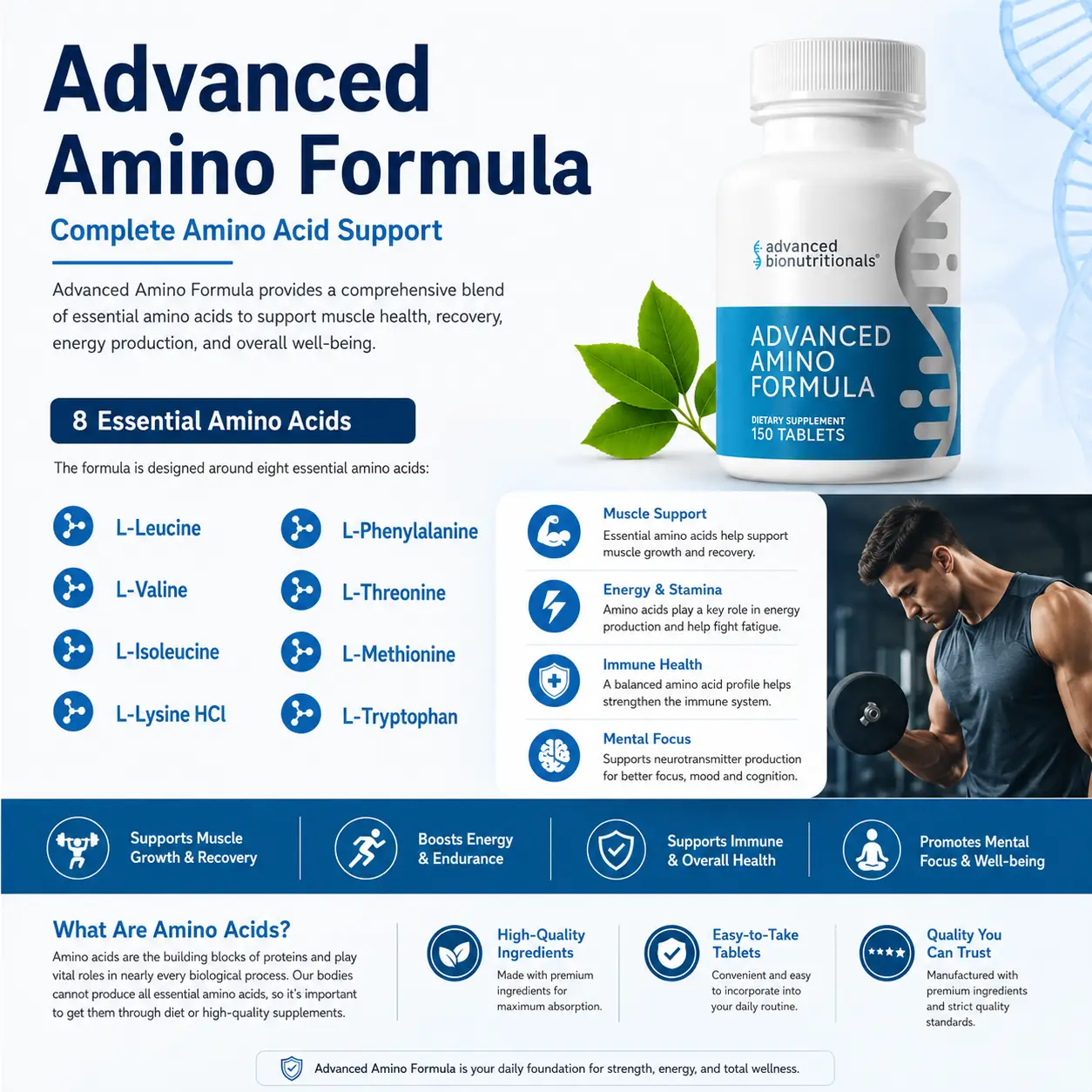
EAA stands for essential amino acid — the broader category of amino acids the body can't produce in sufficient quantities on its own. Advanced Amino Formula provides eight of them: the three BCAAs, plus lysine, phenylalanine, threonine, methionine, and tryptophan.
Why Leucine Matters
Leucine is the amino acid most associated with triggering muscle protein synthesis signaling, which is why it's often the star ingredient in BCAA marketing. That signaling role is real and well documented in nutrition research.
Why the Other Five Essential Amino Acids Matter
Triggering the process is one thing; having the raw material to complete it is another. Building a full protein molecule requires more amino acids than leucine, isoleucine, and valine alone can supply. That's the practical case for a broader EAA formula: lysine, phenylalanine, threonine, methionine, and tryptophan round out the building blocks a BCAA-only product simply doesn't include.
| Category | Advanced Amino Formula (EAA) | Typical BCAA Product |
|---|---|---|
| Number of amino acids | 8 | 3 |
| Leucine | ✓ | ✓ |
| Isoleucine | ✓ | ✓ |
| Valine | ✓ | ✓ |
| Lysine, phenylalanine, threonine, methionine, tryptophan | ✓ | — |
| Format | Tablets | Powder or capsules |
See the complete eight-amino-acid formula.
View Advanced Amino FormulaExercise Nutrition and Recovery
Both categories are used around training for the same general reason: supplying amino acids the body can put toward protein metabolism during and after exercise. Neither a BCAA nor an EAA product replaces the training stimulus itself — see our full muscle recovery guide for how the pieces fit together.
Which Option Fits Different Goals?
A BCAA product might suit someone specifically focused on the branched-chain trio, often at a lower price point. A full EAA formula suits someone who wants a more complete amino acid profile in one supplement, without needing to add separate ingredients for lysine, phenylalanine, threonine, methionine, and tryptophan. Neither choice is wrong — it comes down to what gap you're trying to fill.