"Low energy" is a broad complaint with a lot of possible causes — sleep, stress, hydration, diet, and training load all play a part. Amino acids are sometimes marketed as an energy fix, so it's worth separating what they can realistically contribute from what they can't.
Why Fatigue Happens
Day-to-day fatigue is usually multi-factorial: insufficient or poor-quality sleep, dehydration, inadequate overall calorie or protein intake, high stress, and heavy training load without enough recovery all contribute. No single supplement addresses all of these, and any product that claims to should be viewed skeptically.
How Amino Acids Relate to Energy Metabolism
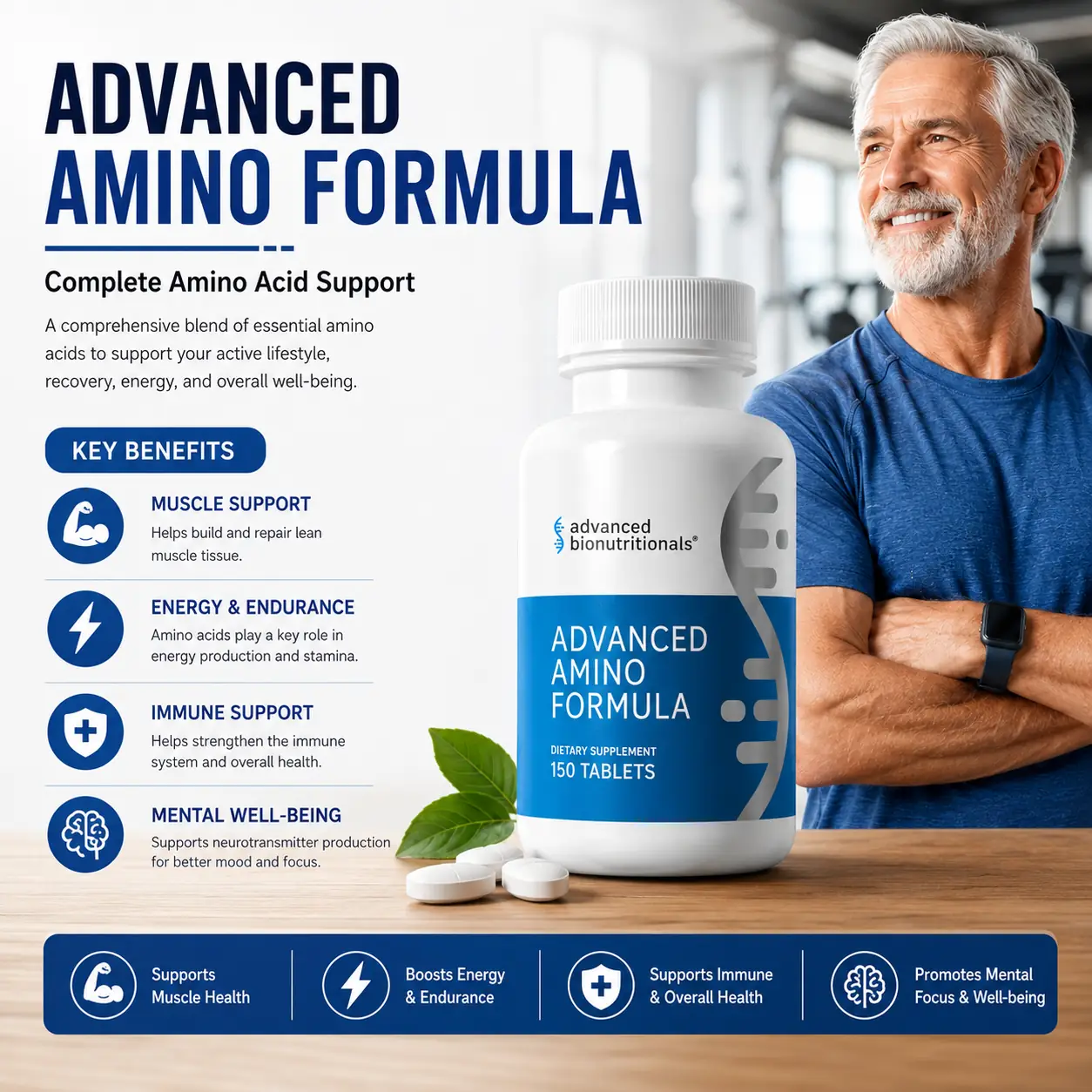
Essential amino acids are involved in numerous metabolic pathways, including ones connected to how the body uses and replenishes energy during and after physical activity. The eight amino acids in Advanced Amino Formula support the raw materials needed for muscle repair and protein synthesis — a process that itself requires energy and is part of why adequate recovery affects how energized you feel the next day.
Tryptophan and Rest
Tryptophan, one of the eight amino acids in the formula, is a precursor involved in the body's serotonin and melatonin pathways, which are connected to sleep regulation. Good sleep is one of the single biggest levers for daytime energy, which is part of why tryptophan gets discussed in this context — though it's a nutritional building block, not a sleep medication.
Leucine and Daytime Energy
Leucine's best-documented role is signaling muscle protein synthesis (covered in depth in our BCAA comparison), not providing a stimulant-style energy boost. If you're looking for the jittery, immediate lift of caffeine, an amino acid supplement isn't designed to replicate that — Advanced Amino Formula contains no caffeine or stimulants.
See how the eight-amino-acid profile supports recovery.
View Advanced Amino FormulaSetting Realistic Expectations
The honest framing: essential amino acids support processes — muscle repair, recovery, metabolic function — that contribute to how energized and capable you feel over time, especially if you train regularly. They are not a substitute for sleep, hydration, or a generally sound diet, and they won't produce an immediate, stimulant-like energy spike.
Building Better Energy Habits
If low energy is a persistent issue, it's worth looking at the fundamentals first:
- Prioritize consistent, adequate sleep before adding supplements
- Stay hydrated throughout the day, not just around workouts
- Make sure overall protein and calorie intake matches your activity level
- Build a consistent post-workout routine so recovery isn't an afterthought
- Talk to a doctor if fatigue is severe, sudden, or persistent — it can be a sign of an underlying issue that a supplement won't fix